Client Success Story: How Andrew Burgess cuts through the AI hype
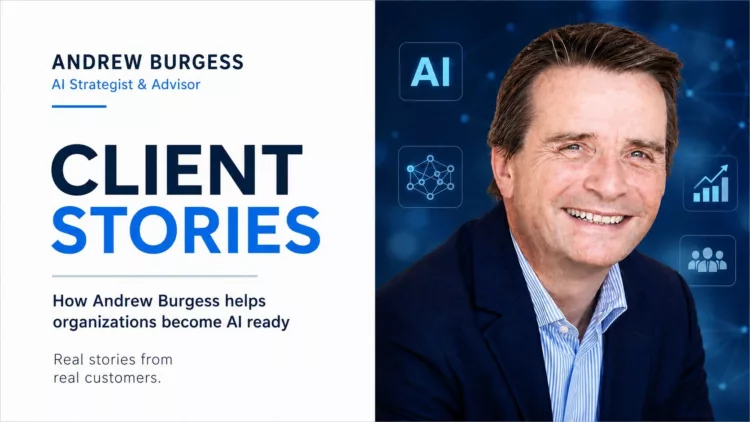
Are your ready for AI? For strategist and advisor Andrew Burgess, helping organizations answer that question has become his work. Through his consultancy, Greenhouse AI, Andrew advises businesses, charities, museums, financial institutions and public organizations on how to adopt AI responsibly, strategically and effectively. In a world increasingly dominated by AI headlines, fear and hype, his approach is refreshingly practical
Most organizations know they should use AI. Few know where to begin.
Artificial intelligence is no longer a future technology. It is already writing emails, analyzing documents, answering customer questions and changing how businesses operate.
Yet for many organizations, the biggest challenge is not adopting AI.
It is knowing where to start.
That uncertainty is exactly where AI strategist and advisor Andrew Burgess has built his business.
Through Greenhouse AI, Andrew helps businesses, charities, museums, financial institutions and public organizations turn AI from an overwhelming concept into a practical business tool.
His approach is not about replacing people or chasing the latest trend.
It is about solving real business problems.

Andrew Burgess at a glance
- Business: Greenhouse AI
- Location: United Kingdom
- Specialization: AI strategy, AI ethics, AI implementation and advisory
- Author:The Executive Guide to Artificial Intelligence
- Clients include: museums, charities, financial institutions and large organizations
- Website: thegreenhouse.ai
From business problems to AI solutions
Long before ChatGPT became a household name, Andrew was helping organizations improve the way they worked. His background in outsourcing, business process improvement and automation eventually led him into artificial intelligence. Today, that experience gives him something many AI consultants lack.
He does not just advise organizations on AI strategy.
He helps build the solutions too.
“I’m an advisor who can actually get their hands dirty and build things as well.”
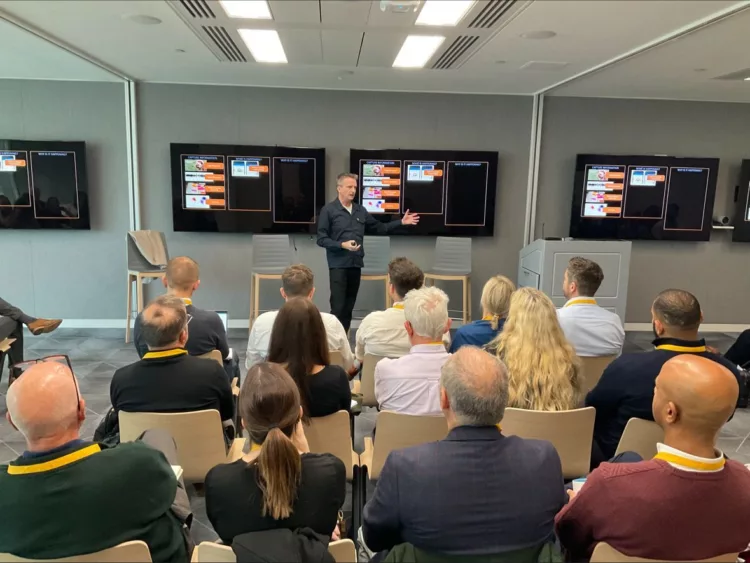
That combination allows him to support organizations at every stage of their AI journey, whether they are exploring AI for the first time, developing governance frameworks, identifying opportunities or building practical applications.
For Andrew, technology is never the objective.
Solving the right business problem is.
The ChatGPT moment changed everything
When ChatGPT launched, AI stopped being a specialist topic almost overnight. Suddenly, leadership teams everywhere wanted answers.
Should we be using AI?
Are we falling behind?
Where do we even begin?
“Before November 2022 things were busy. Afterwards it went completely crazy.”
Andrew quickly found himself helping organizations separate genuine opportunities from the growing hype. While AI had become more accessible than ever, it had also become far more confusing. Organizations no longer needed convincing that AI mattered. They needed help deciding what to do next.
The biggest mistake businesses make with AI
Many organizations start with the wrong question.
Instead of asking:
What business problem are we trying to solve?
They ask:
How can we use AI?
Andrew believes that is one reason so many AI projects struggle. The most successful organizations do not begin with technology.
They begin with business outcomes.
Whether the goal is improving customer service, helping employees make better decisions, analyzing data faster or streamlining operations, AI should always support a clear objective.
“The AI I focus on helps people make better decisions and gives them insights they didn’t have before.”
That practical mindset helps organizations adopt AI in ways that create genuine value rather than simply following industry trends.
For Andrew, the most important question is not “How do we use AI?”
It is:
What problem are we trying to solve, and is AI the right tool to solve it?
Building trust before winning clients
For someone working at the forefront of AI, Andrew still believes one of his most valuable business assets is something much simpler.
His website.
Most of his business comes through networking, referrals and existing relationships. But once someone discovers him, his website plays an essential role.
It validates his expertise. It explains what he does. It showcases the depth behind his advice.
it gives potential clients somewhere to go when they want to decide whether he is the right person to help them.
“The website sits there and does its job.”
For Andrew, a website is not simply a digital business card.
It is a trust signal.
“People can go there and see that what I say I do is actually what I do.”
His website also includes an AI Readiness Assessment, a short questionnaire that helps organizations understand their current AI maturity and identify areas for improvement.
Sometimes it acts as an entry point for new conversations. Other times, Andrew uses it directly within client projects.
Rather than acting as a static brochure, the website has become an extension of his consultancy.

Why choosing the right domain mattered
For a business built around artificial intelligence, first impressions matter.
That was one reason Andrew chose a .AI domain.
It immediately communicates his area of expertise while reinforcing the credibility of his brand.
“The .AI domain was actually what brought me to EuroDNS.”
Managing his online presence also needed to be straightforward.
As his consultancy grew, having everything in one place became just as valuable as the domain itself. Managing DNS records, renewals and technical settings through a straightforward control panel means less time spent on administration and more time focused on clients.
For independent consultants and small businesses, having reliable tools that are easy to manage can make a significant difference to day-to-day operations.
As someone who manages much of his own website and technical setup, Andrew values tools that are simple, reliable and easy to use.
With most of his time dedicated to helping clients make sense of AI, reliable domain management means one less thing to think about.
Standing out in an overcrowded AI market
The rapid growth of AI has created another challenge. Everyone is talking about it. New tools, articles, videos, webinars and expert opinions appear every day. Some are useful. Many simply add to the noise.
For an independent advisor like Andrew, standing out requires more than posting more often. It requires credibility.
And it requires knowing when not to add to the conversation.
“You have to be very selective and focus on quality rather than posting every day.”
Rather than chasing every trend, Andrew focuses on demonstrating expertise through real work, client projects and published writing.
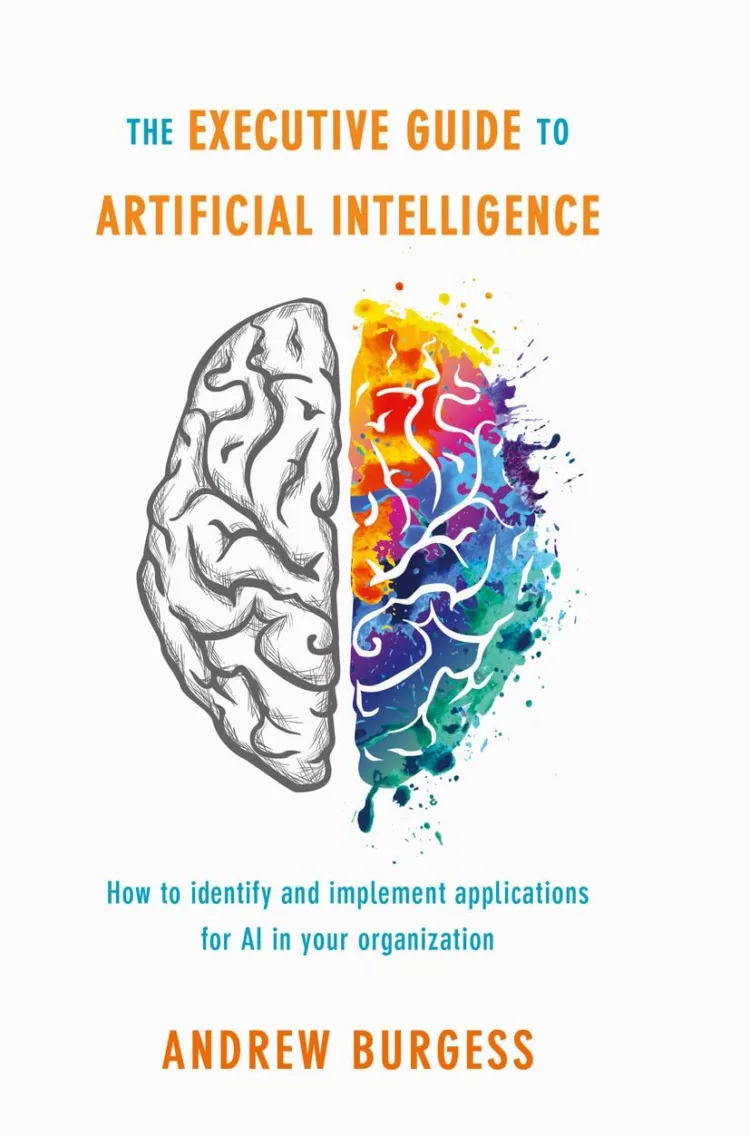
His book, The Executive Guide to Artificial Intelligence, now in its second edition, also plays an important role in establishing that credibility.
Making AI accessible to everyone
Not all of Andrew’s work is commercial. As AI continues to reshape society, he is exploring ways to make AI education more accessible to communities that risk being left behind. That includes refugees, people with disabilities, people with learning difficulties and other underserved groups.
Large technology companies may have the resources, expertise and access needed to benefit from AI. Many smaller or more vulnerable communities do not. Andrew wants to help close that gap by making basic generative AI training available to more people.
Because for him, the future of AI should not belong only to organizations with the biggest budgets or teams closest to the technology.
It should be accessible to anyone with a problem worth solving.
Andrew Burgess has built his career helping organizations combine strategic thinking with hands-on technical expertise to make AI useful, responsible and genuinely valuable.
His approach begins with better questions, clear business objectives and a willingness to use AI only where it can make a meaningful difference.
And as more businesses search for trusted guidance, having a professional online presence, from the right domain to a website that builds confidence, remains just as important as the technology itself.
Get a Free Domain with Hosting: Introducing Bundles
The .berlin domain: your local business card on the internet